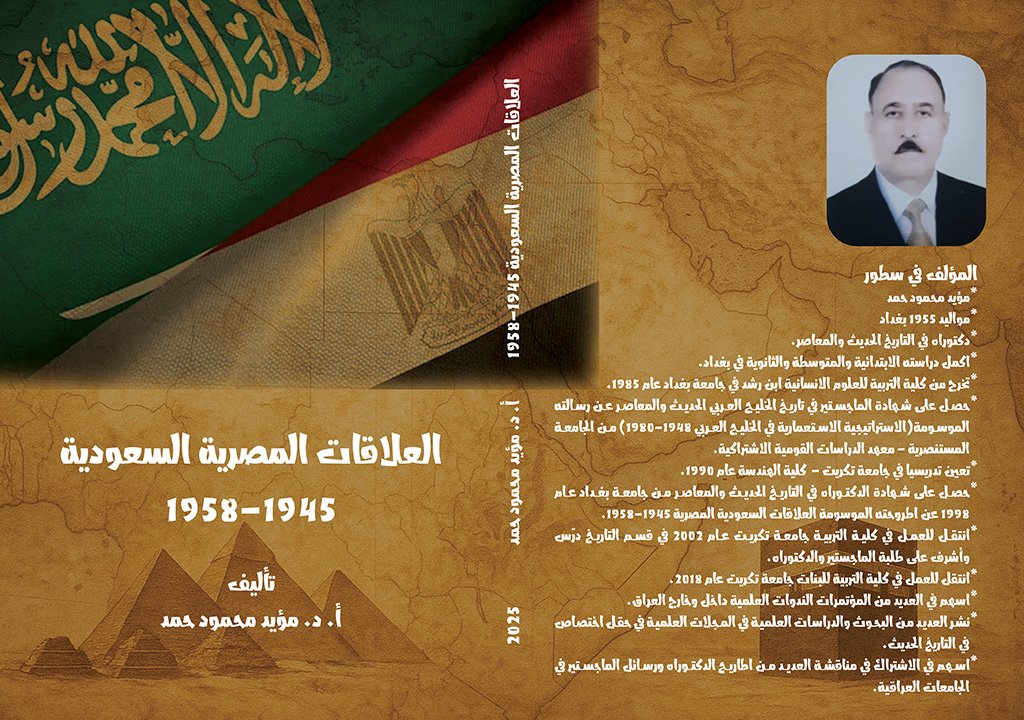
Saudi Relations, Egypt From Closeness to Tension 1945-1958
العلاقات السعودية المصرية: من التقارب إلى التوتر 1945-1958
تأليف: الأستاذ الدكتور مؤيد محمود حمد الهاشمي
يستعرض هذا الكتاب تاريخ العلاقات السعودية المصرية في المدة بين عامي 1945 و1958م، مسلطاً الضوء على الأهمية الاستراتيجية للدولتين في الوطن العربي والسياسة الدولية. ويتناول المؤلف مراحل تطور هذه العلاقات بدءاً من الجذور التاريخية وأزمة "المحمل المصري" عام 1926م وتأثيرها في توتر العلاقات وقطيعتها لسنوات، مبيناً كيف ساهمت المشاريع الهاشمية في تلك الحقبة في ظهور "محور الرياض - القاهرة" داخل الجامعة العربية للحفاظ على موازين القوى. كما يوثق الكتاب المواقف المشتركة تجاه القضية الفلسطينية، والدعم السعودي القوي لمصر خلال مراحل نضالها الوطني، لاسيما في قضية تأميم قناة السويس والعدوان الثلاثي عام 1956م وما رافقه من قرار سعودي بقطع إمدادات النفط عن بريطانيا وفرنسا، وصولاً إلى الفصل الأخير الذي يحلل تحول العلاقة من الاتفاق والتقارب إلى التنافس في ظل تصاعد التيارات القومية وظهور مشاريع الوحدة العربية المتنافسة مثل الجمهورية العربية المتحدة والاتحاد الهاشمي.
Saudi Relations, Egypt: From Closeness to Tension 1945-1958
By: Prof. Dr. Muayyad Mahmoud Hamad Al-Hashimy
This scholarly work examines the historical trajectory of relations between Saudi Arabia and Egypt from 1945 to 1958, highlighting the strategic significance of both nations within the Arab world and international politics. The author explores the evolution of these ties, beginning with their historical foundations and the 1926 "Egyptian Mahmal" crisis, which precipitated a prolonged rupture in diplomatic relations. It elucidates how Hashemite regional projects during this era prompted the formation of the "Riyadh–Cairo Axis" within the Arab League as a mechanism to preserve the regional balance of power. Furthermore, the book documents their coordinated stances on the Palestinian cause and the robust Saudi support for Egypt throughout its national struggle, most notably during the nationalization of the Suez Canal and the Tripartite Aggression of 1956—a stance bolstered by the Saudi decision to impose an oil embargo on Britain and France. The final chapter concludes by analyzing the transition of the relationship from consensus and convergence to rivalry and competition, driven by the rise of nationalist ideologies and the emergence of conflicting pan-Arab unity projects, such as the United Arab Republic and the Hashemite Arab Federation.
